
How to Ride a Quad Bike?
Riding a quad bike on sand dunes is one of the most exciting desert adventures you can experience, but it is nothing like driving on a normal road. The soft, shifting surface of desert terrain demands a
Riding a quad bike on sand dunes is one of the most exciting desert adventures you can experience. But it is nothing like driving on a normal road. The soft, shifting surface demands smooth throttle control, active body balance, and a completely different riding approach.
Many first-time ATV riders underestimate this. That mistake can turn a thrilling desert safari into a dangerous situation. Whether you are exploring the red dunes of Lahbab in Dubai or gearing up for your very first quad biking experience, the right technique matters.
This step-by-step guide covers everything, from essential safety gear and basic quad bike controls to proven riding techniques for climbing and descending sand dunes safely.
Why Riding a Quad Bike on Sand Dunes Is Different
Most people assume quad biking on sand works the same as riding on dirt or gravel. It does not.
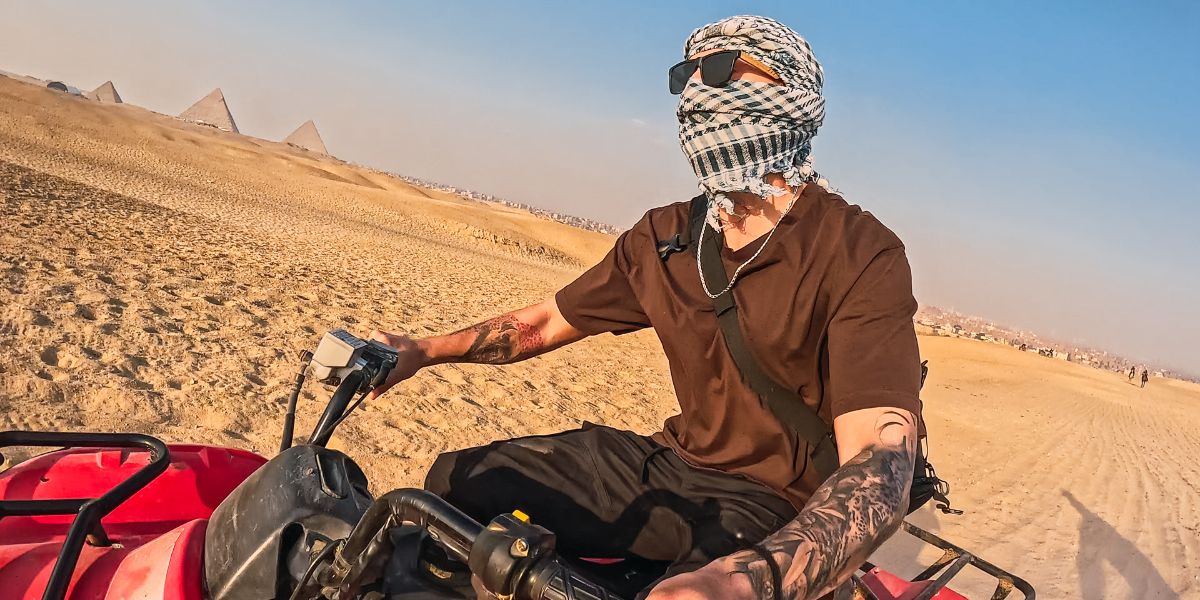
Sand is soft, loose, and constantly shifting under your wheels. One wrong move and your tires sink, your momentum dies and you are stuck. The desert terrain changes everything, from how you accelerate to how you steer and brake.
On a hard surface, traction is predictable. On sand dunes, it never is. The angle of the dune, wind conditions and sand temperature all affect how your ATV handles. This is why even experienced off-road riders take time to adjust when they first hit the desert.
Three things separate a safe, enjoyable dune ride from a risky one. throttle control, body posture and steady momentum. Master these basics and the desert becomes your playground.
Essential Safety Gear Before You Ride
No matter how experienced you are, safety gear is non-negotiable. The desert is an unforgiving environment. One small fall without proper protection can turn a fun adventure into a serious injury. Before you even start the engine, make sure you are fully geared up.
1. Helmet and Goggles
A helmet is the single most important piece of equipment for any quad bike rider. It protects your head in the event of a fall, a collision or an unexpected rollover on a steep dune. Always choose a certified, properly fitted helmet and fasten the chin strap securely before riding.
Goggles are equally important in desert conditions. Sand gets kicked up constantly, by your own tires and by riders ahead of you. Without goggles, fine desert dust can blur your vision within minutes. Clear vision on shifting sand dunes is not optional. It is survival.
2. Protective Clothing and Footwear
What you wear on a quad bike matters more than most beginners realize. A full-sleeved shirt and long trousers protect your skin from sun exposure, sand abrasion and minor scrapes in case of a fall. Lightweight, breathable fabric works best in the desert heat.
For footwear, always wear closed-toe shoes or boots with solid ankle support. Your feet take a lot of impact on uneven dune terrain. Sandals and flip flops are an absolute no. A firm grip on the footpegs starts with the right footwear.
Not sure what to wear for your desert ride? Check out this complete guide on what to wear in Dubai desert safari before you pack.
How to Ride a Quad Bike: Basic Controls Explained
Before you hit the dunes, you need to understand your machine. A quad bike may look straightforward, but each control plays a specific role in keeping you safe on desert terrain. Spend five minutes learning these basics and your first ride will feel far more confident and controlled.
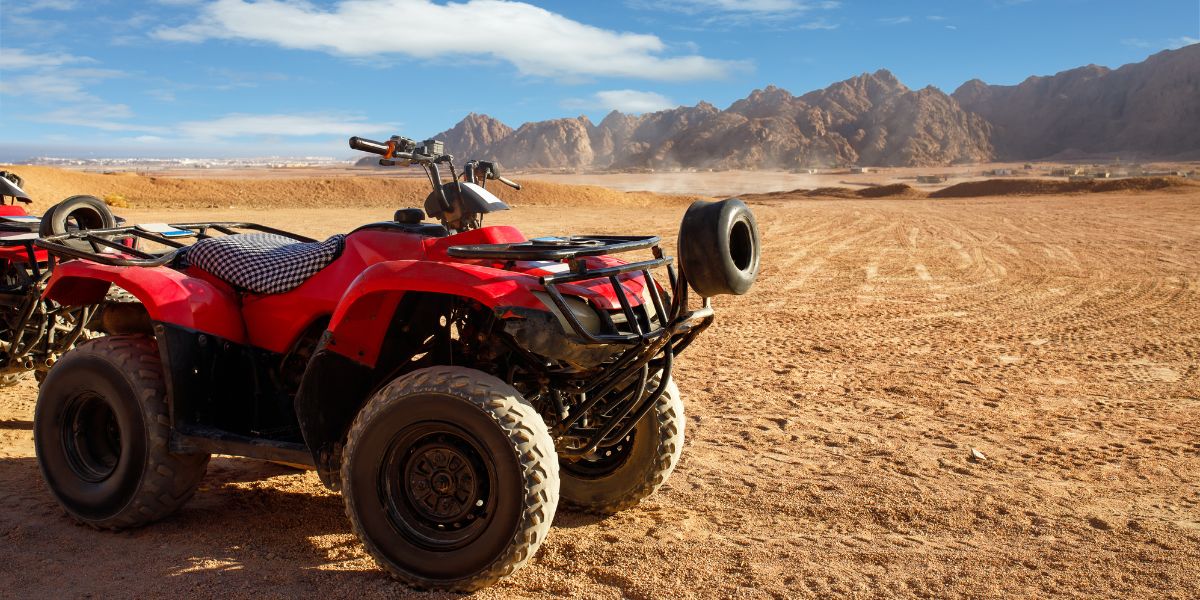
Throttle, Brakes and Gear Shifter
The throttle is located on the right handlebar and is operated with your thumb. Press it forward gently to accelerate and release it to slow down. On sand dunes, smooth and gradual throttle input is everything. Sudden aggressive acceleration causes the rear wheels to spin and dig into the sand.
The brakes work similar to a bicycle. The right lever controls the front brakes and the left lever controls the rear. Some ATV models also have a foot pedal for the rear brake. Never grab both brakes hard at the same time, especially on a downhill dune. Apply pressure gradually and evenly for a controlled stop.
For beginners, most desert tour operators provide automatic quad bikes. This means your gear shifter has just three positions Forward, Neutral and Reverse. No clutch, no manual shifting. You simply select your direction and focus entirely on the ride.
Engine Cut-Off Switch
This is the one control every rider must know before anything else. The engine cut-off switch is a small red button located on the left handlebar. In an emergency, whether you lose control, panic or feel unsafe, press this switch immediately. The engine stops instantly.
It sounds simple. But in a high-pressure moment on a steep sand dune, knowing exactly where this button is can make a critical difference. Always locate it before you start the engine.
Step-by-Step Guide to Riding a Quad Bike on Sand Dunes
Knowing the controls is one thing. Applying them on live desert terrain is another. Sand dunes are unpredictable every slope, every crest, and every turn feels different. This step-by-step breakdown gives you a clear and practical riding approach so you can handle whatever the desert throws at you.
1. Start Slow and Feel the Sand
Your first few minutes on a quad bike should never be about speed. They should be about understanding how the bike responds to the surface beneath you.
Press the throttle gently and let the ATV move at a comfortable pace. Feel how the tires grip the sand. Notice how the bike shifts when the surface changes from firm to soft. Keep your arms relaxed and your body loose. Tension in your arms makes steering harder and reactions slower.
Think of this phase as a conversation with the machine. The more you listen, the better you ride.
2. How to Maintain Steady Momentum
Momentum is your greatest asset on sand dunes. Lose it and you lose control.
A common beginner mistake is slowing down at the wrong moment, usually when approaching a dune or mid-climb. The bike loses power, the tires start spinning and the ATV gets stuck. Avoid this by keeping a consistent throttle throughout. Do not speed up or slow down suddenly.
If you feel the bike struggling, do not panic and do not brake. Maintain your throttle input and let the engine pull through. Smooth and steady always wins on desert terrain.
3. How to Climb a Sand Dune Safely
Climbing a dune is one of the most exciting parts of quad biking. It is also where most beginner mistakes happen.
Follow these steps every time you approach a dune:
- Approach the dune straight on, never at an angle
- Build moderate speed before you reach the base
- Lean your body slightly forward as you begin to climb
- Keep the throttle steady and consistent all the way to the crest
- Never accelerate hard at the pea, the front wheels can lift off the ground
If you lose momentum halfway up, do not try to turn around on the slope. Apply the brakes gently, bring the bike to a stop, and wait for your guide to assist you.
How to Descend a Sand Dune Safely
Going down a dune requires more control and more focus than climbing. Many riders instinctively grab the brakes hard on a descent. That is the wrong move.
Here is the correct technique:
- Approach the descent straight, never sideways
- Release the throttle gradually before you begin going down
- Shift your body weight slightly towards the rear of the ATV
- Apply the brakes gently and intermittently, never all at once
- Keep the bike moving in a straight controlled line until you reach flat ground
The rear of the bike must stay planted. Leaning back helps achieve this and prevents the ATV from nose-diving on a steep dune face.
How to Turn and Steer on Sand
Steering on sand is very different from steering on a hard surface. The tires do not grip the same way. Sharp sudden turns on loose sand are one of the leading causes of rollovers for beginner riders.
To turn safely on desert terrain follow this approach:
- Slow down before you begin any turn, never turn at full speed
- Turn the handlebars gradually in your desired direction
- Lean your upper body into the turn at the same time
- Keep your knees firm against the ATV for added stability
- Maintain a light steady throttle through the turn and accelerate gently as you exit
Always look where you want to go, not at the obstacle you want to avoid. Your body naturally follows your eyes on a quad bike. Use that to your advantage.
Common Beginner Mistakes to Avoid
Knowing what not to do is just as important as knowing what to do. Here are the most common quad biking mistakes beginners make on sand dunes.
Aggressive Throttle from the Start Sudden acceleration causes rear wheels to spin and dig into soft sand instantly. Always build speed gradually and let the tires find their grip first.
Braking Too Hard on Descent Squeezing brakes suddenly on a downhill dune can lock the wheels and send the ATV sideways. Use gentle intermittent braking and let engine braking do the work.
Turning at High Speed Sand does not grip like a hard surface. Sharp turns at speed increase rollover risk significantly. Always slow down before steering into any turn.
Losing Momentum Mid-Climb Hesitating halfway up a dune kills your momentum and gets the bike stuck. Maintain a steady throttle from base to crest without slowing down.
Stiff Body Position Gripping the handlebars too tightly and sitting rigid reduces your control. Stay relaxed, bend your knees and let your body move naturally with the terrain.
Ignoring Your Guide Your guide knows the terrain, the soft spots and the safe lines. Always stay with the group and follow instructions.
Top Safety Tips for Desert Quad Biking
Desert quad biking is safe when done right. These simple but essential safety tips will keep your ride smooth, controlled and injury free.
Always Wear Full Protective Gear Helmet, goggles, gloves and proper footwear are non-negotiable. Gear up completely before you start the engine, no exceptions.
Attend the Safety Briefing Every reputable desert tour operator provides a pre-ride safety briefing. Pay full attention. Those few minutes cover everything you need to know about the terrain, the bike and the rules.
Never Ride Alone Desert terrain is vast and unpredictable. Always ride with a guide or within a group. If something goes wrong, you need someone nearby to help.
Stay Hydrated Desert temperatures rise quickly, especially during summer months. Dehydration affects your focus and reaction time. Carry water and drink regularly throughout the ride.
Maintain Safe Distance Between Riders Always keep a comfortable gap between yourself and the rider ahead. Sand kicked up by other ATVs reduces visibility and sudden stops happen fast on dune terrain.
Stick to Designated Riding Areas Never ride outside the approved desert trail or marked zone. Unmarked areas can hide soft sand pockets, sudden drops and hidden obstacles.
Know Your Limits Do not attempt steep dunes or advanced terrain before you are ready. Start with flat open areas, build your confidence gradually and progress at your own pace.
Final Thoughts
Sand dune quad biking is an experience unlike anything else. But it rewards those who prepare. Wear your gear, understand your controls, maintain steady momentum and always follow your guide.
Start slow, build your confidence and let the desert do the rest.
Ready to experience the dunes? Book your quad bike adventure in Dubai today or reach out directly on WhatsApp, we are just a message away.
And once you are out there, make the most of every moment, here are some best poses for incredible desert safari pictures to capture the memories.
